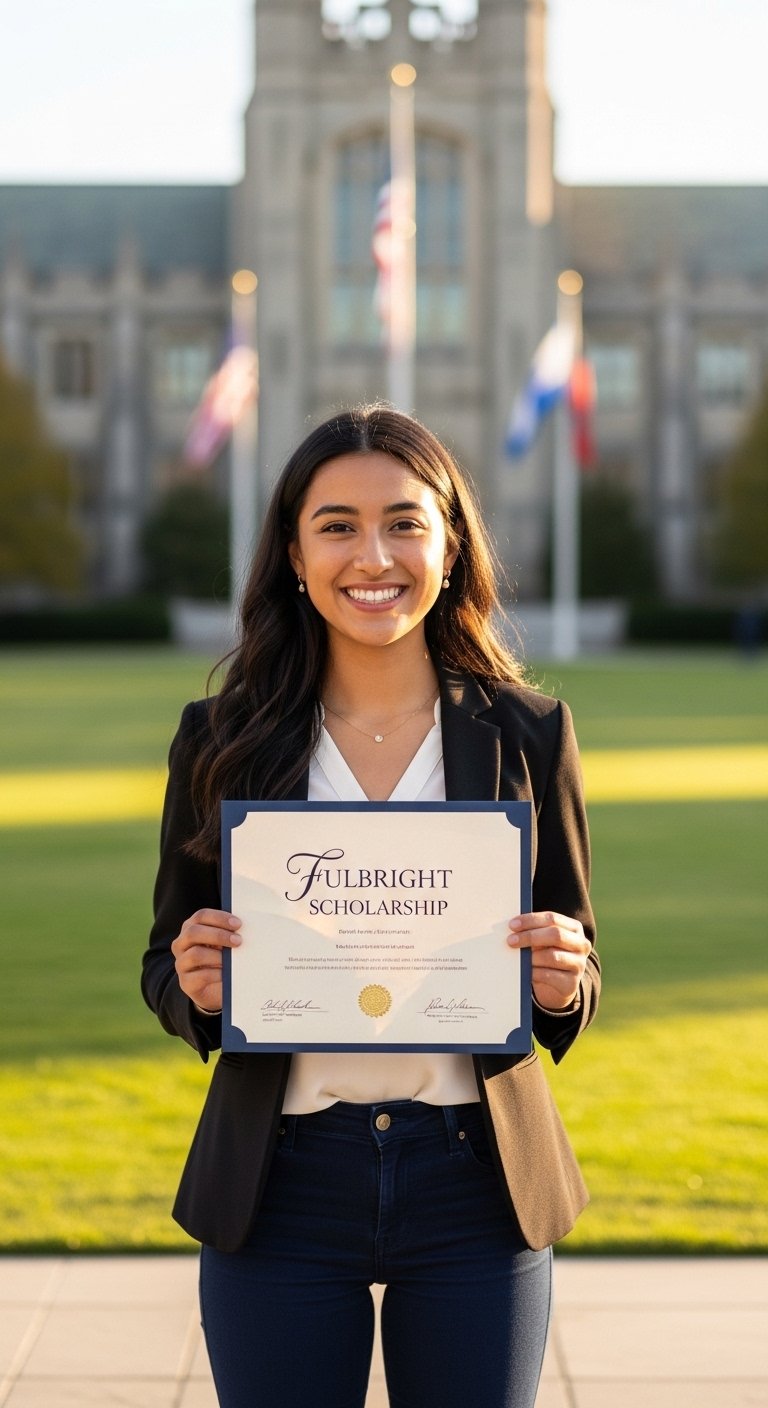
There’s a moment every ambitious student eventually has — standing at the crossroads between staying comfortable and taking a leap that could redefine their entire career. For thousands of people across the world every year, the Fulbright Scholarship is that leap. It is not just financial aid. It is a stamp of recognition, a network, and a gateway to a life you probably didn’t think was accessible to someone like you.
This guide breaks down everything — from what the program actually is, to what it pays, to how selection actually works, to the questions nobody seems to give straight answers to.
What Is the Fulbright Scholarship?
The Fulbright Program was established in 1946 by U.S. Senator J. William Fulbright, who believed that educational exchange between nations could reduce conflict and promote lasting peace. The core idea was simple: if people from different countries learned alongside each other, they’d be less likely to go to war with each other.
That philosophy has held up remarkably well. Decades later, the program remains the U.S. government’s flagship international educational exchange initiative, sponsored by the U.S. Department of State and administered through binational Fulbright Commissions, U.S. Embassies, and organizations like the Institute of International Education (IIE). It now operates in over 160 countries worldwide, touching virtually every corner of the globe.
Every year, the program awards approximately 4,000 grants to international students — and a separate pool of awards to U.S. citizens going abroad. In total, Fulbright alumni span more than 55 Nobel Prize laureates, 89 Pulitzer Prize winners, and 40 heads of state. The company you’d be keeping is, to put it plainly, extraordinary.
The Three Core Programs
Fulbright isn’t one scholarship — it’s a family of them. Understanding which arm of the program applies to you is the first step.
The Fulbright Foreign Student Program is the one most international applicants pursue. It supports graduate students, young professionals, and artists from outside the United States to pursue Master’s or doctoral degrees and conduct research at U.S. universities. If you are a student in Nigeria, Ghana, India, Brazil, or any of the 155+ eligible countries, this is your pathway.
The Fulbright U.S. Student Program operates in reverse — it sends U.S. citizens abroad for research, study, or teaching. U.S. applicants must hold a bachelor’s degree and must not yet hold a PhD at the time of applying.
The Fulbright U.S. Scholar Program targets established American academics and professionals — think professors, researchers, and administrators who want to lecture or conduct research internationally.
For the purpose of this guide, we focus primarily on the Foreign Student Program, since it represents the most widely sought opportunity for international applicants.
Total Award Value and Financial Benefits
Let’s talk numbers, because this is where the Fulbright scholarship genuinely sets itself apart from most other opportunities.
The Fulbright Foreign Student Program is fully funded. That means the program doesn’t just help — it eliminates the financial burden of studying in the United States almost entirely. Here is what a Fulbright award typically covers:
- Full Tuition Coverage — Your university fees are paid directly, regardless of which accredited U.S. institution you attend. Whether you end up at a state university or a private research institution, tuition is covered.
- Monthly Living Stipend — Grantees receive a monthly stipend to cover accommodation, food, transport, and daily expenses. The exact amount varies by city and host institution but generally ranges between $1,500 and $2,500 per month, adjusted for cost of living in the host city.
- Round-Trip Airfare — Economy-class flights from your home country to the United States and back upon completion of the program are included.
- Health and Accident Insurance — Comprehensive medical coverage is provided for the full duration of the grant. This is particularly significant given the high cost of healthcare in the United States.
- Settling-In Allowance — A one-time payment is typically provided upon arrival to help cover initial setup costs — things like bedding, kitchenware, and other expenses you encounter in the first few weeks.
- Book and Research Allowance — Some awards include additional support for academic materials, lab supplies, or research-related expenses.
When you add all of this together, the total estimated value of a Fulbright award ranges from approximately $30,000 to over $50,000 per year, depending on the duration of the grant, the host city, and the specific program structure. For a two-year Master’s degree, the total grant value can comfortably exceed $90,000 to $100,000 — making it one of the most generous scholarships in the world.
The FY2026 appropriations draft allocated $287.8 million to the Fulbright Program alone — a figure that reflects the scale and prestige of the initiative within the U.S. government’s foreign policy framework.
Fields of Study Covered
One of the refreshing things about Fulbright is how inclusive it is when it comes to academic disciplines. Almost every field is eligible, including:
- Social Sciences and Humanities
- STEM fields (Science, Technology, Engineering, Mathematics)
- Law and Policy
- Business and Economics
- Public Health and Medicine (excluding clinical medical degrees)
- Creative and Performing Arts
- Environmental Studies
- Education and Pedagogy
The only field currently excluded from the Foreign Student Program is enrollment in clinical medical degree programs. Everything else is fair game.
Who Can Apply?
Eligibility for the Fulbright Foreign Student Program is broad by design, though specific criteria vary by country. Here are the core requirements:
- You must be a citizen and resident of one of the 155+ participating countries at the time of application. Dual citizens should check country-specific rules.
- You must hold — or be in the process of completing — a bachelor’s degree equivalent before the grant start date.
- You must demonstrate English language proficiency. A minimum TOEFL iBT score of 79–80 or an IELTS score of 6.5 is typically required, though some countries set higher thresholds.
- You must not currently reside in the United States or have lived there for an extended period.
- You should have a clearly defined academic or research project that aligns with the program’s goals of cross-cultural engagement.
The program particularly encourages applications from candidates representing underrepresented groups, minority communities, and those from economically disadvantaged backgrounds — reflecting Fulbright’s core mission of broad and inclusive access.
The Selection Process: What They’re Actually Looking For
Every year, tens of thousands of candidates apply for roughly 4,000 spots. That’s an extraordinarily competitive ratio, and it means your academic grades alone will not get you in. Fulbright selects on a different basis than most scholarships.
The selection committee weighs three primary dimensions:
Academic and Professional Excellence — Your record matters, obviously. But Fulbright is less interested in perfection and more interested in trajectory. A candidate with a strong upward academic arc and clear professional accomplishments will often outperform someone with flawless grades but no evidence of real-world impact.
Quality and Feasibility of the Project Proposal — Your Statement of Grant Purpose is arguably the most important document in your application. It must describe what you intend to study, why the U.S. is the right place to do it, how it connects to your home country’s needs, and what you plan to do when you return. Vague, generic proposals are rejected. Specific, well-researched, and personally motivated ones succeed.
Cross-Cultural Ambassadorship Potential — Fulbright is not just looking for scholars. It is looking for people who will represent their home country with curiosity and openness, build genuine relationships in the U.S., and return home to contribute meaningfully. This is reflected in how candidates articulate their motivations and demonstrate past leadership or community engagement.
The selection journey itself unfolds in stages: initial technical review for eligibility, a national screening committee review, and then evaluation by U.S. Embassy or Fulbright Commission panels in-country, which may include interviews. Timing from application to notification can stretch across six to eight months.
How to Apply: Step by Step
The application process is conducted entirely online through the official Fulbright portal in your country. Here is the general roadmap:
- Identify your country’s Fulbright office — Visit the Fulbright website and locate your national Fulbright Commission, Foundation, or U.S. Embassy contact. Each country has its own deadline and specific requirements, so this step is non-negotiable.
- Prepare your documents — You’ll typically need academic transcripts, a current CV or resume, your Statement of Grant Purpose, a Personal Statement, and three letters of recommendation. At least one must come from an academic referee.
- Write compelling essays — Successful applicants often spend four to six weeks crafting and revising their statements. Write in clear, direct language. Avoid academic jargon. Tell your story honestly and connect it to a larger purpose.
- Secure your references — Give your referees enough time. They need to complete structured reference forms, which are usually submitted online through the system.
- Submit your application before your country’s deadline — National deadlines vary, but they generally fall between January and September depending on the country. Missing the deadline, for any reason, is final. No exceptions are made.
Life as a Fulbright Scholar
Beyond the funding, the Fulbright experience itself is transformative in ways that are harder to quantify. Grantees join a global alumni network of over 400,000 people — former heads of state, scientists, filmmakers, diplomats, and educators spread across every sector imaginable.
During your grant year, Fulbright also organizes enrichment seminars that bring grantees together for cross-cultural exchange. These gatherings are often where lasting professional relationships — and genuine friendships — are formed.
The network follows you long after the grant ends. Being a Fulbright alumnus opens doors in academia, international organizations, government, and the private sector. In many countries, Fulbright alumni associations remain active communities that offer mentorship, job opportunities, and continued advocacy for educational exchange.
Frequently Asked Questions (FAQ)
Q: Is the Fulbright Scholarship truly fully funded? Yes. For the Foreign Student Program, the award covers full tuition, a monthly living stipend, round-trip airfare, health insurance, and a settling-in allowance. There are no hidden costs that the scholarship is expected to cover but doesn’t.
Q: Can I apply for Fulbright more than once? Yes. Previous applicants who were not selected may reapply. However, if you have already received a Fulbright grant, you will be at a competitive disadvantage in subsequent cycles, though not outright disqualified.
Q: Is there an age limit for applicants? There is no official age ceiling for the Foreign Student Program. However, applicants should note that the program is oriented toward those with limited professional experience — typically seven years or fewer in their chosen field. More experienced professionals may be better suited for the Fulbright Scholar Program.
Q: Can I choose which university I attend? This depends on the placement model used in your country. Some countries use IIE Placement, where IIE applies to institutions on your behalf based on your field and preferences. Others use a self-placement model, where you are expected to secure your own university admission. Check with your national Fulbright office for the specific arrangement.
Q: Is the GRE required? Requirements vary by country and program. Some award cycles have required GRE scores (minimum 138 Verbal and 136 Quantitative under the current scoring system), while others do not. Always confirm this with your national Fulbright office, as requirements can shift year to year.
Q: What is the language requirement? A TOEFL iBT score of 79–80 or an IELTS score of 6.5 is the baseline requirement, though individual country programs may set higher standards.
Q: Can Fulbright cover dependents (spouse or children)? The primary grant is awarded to the individual applicant. Some programs offer limited support for dependents, but this is not universal. Check with your local Fulbright office for country-specific dependent benefits.
Q: What happens if I don’t get selected the first time? Rejection is common, even among eventually successful Fulbright scholars. Use the cycle to strengthen your research proposal, deepen your community engagement, and clarify your professional goals. Many successful Fulbrighters applied two or even three times before receiving the grant.
Q: Does Fulbright require a return home after the grant? Yes. Fulbright grantees are generally expected to return to their home country for at least two years after the grant period ends. This is part of the program’s cultural exchange mission — the goal is for grantees to bring their U.S. experience back to their communities, not to permanently relocate.
Q: Where do I apply? Apply through your national Fulbright Commission, Foundation, or U.S. Embassy. The central portal is available at foreign.fulbrightonline.org, where you can select your country and access specific guidelines.
The Fulbright Scholarship is rare in the truest sense — a program that provides world-class financial support while demanding something deeper in return: that you go somewhere, learn something real, and come back changed. If you have the drive, the intellectual curiosity, and the willingness to invest months into a thoughtful application, few opportunities in the world offer what Fulbright does.