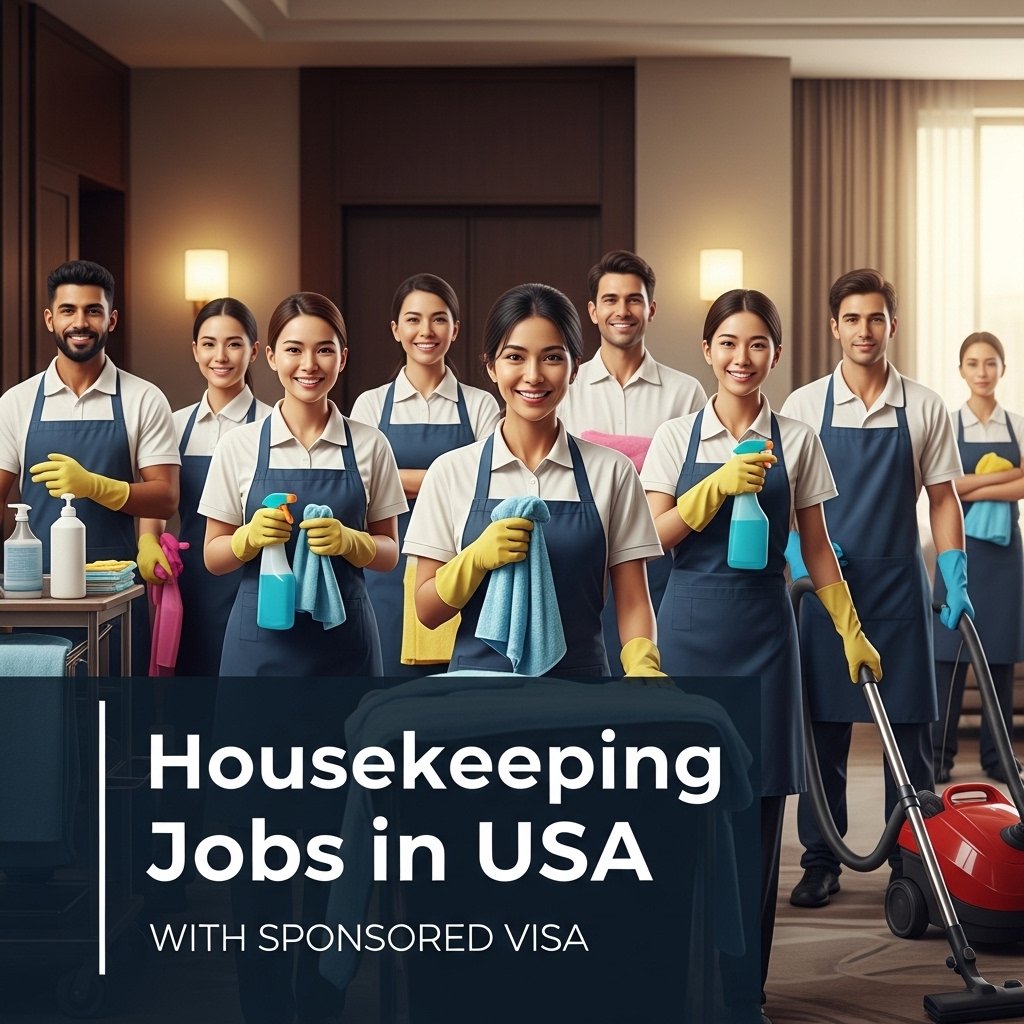
The United States hospitality and domestic service industry remains one of the most active sectors when it comes to hiring foreign workers. Every year, hundreds of hotels, resorts, private households, and cleaning companies across the country bring in skilled and semi-skilled workers from abroad through various visa sponsorship programs. If you have been considering a housekeeping career in the USA and you are wondering whether sponsorship is truly possible, the answer is yes — but it requires understanding the process, knowing where to look, and being realistic about what to expect.
This guide walks you through everything you need to know about housekeeping jobs in the USA with sponsored visas, including the types of visas available, how to find legitimate employers, what salary and conditions look like, and how to protect yourself from scams along the way.
What Housekeeping Jobs Actually Involve
Before diving into the visa conversation, it helps to understand what the work itself looks like. Housekeeping in the American context covers a wide range of roles. In hotels and resorts, housekeepers are responsible for cleaning guest rooms, making beds, replenishing toiletries, vacuuming hallways, doing laundry, and maintaining the overall cleanliness standards of the property. In private households, the role often extends to cooking light meals, organizing spaces, running errands, and sometimes caring for elderly residents or children as a combined housekeeper-caregiver.
Commercial cleaning roles, sometimes grouped under housekeeping, involve maintaining office buildings, hospitals, schools, and retail spaces. These positions tend to be more physically demanding and often run on night or early morning schedules.
The common thread across all these roles is that they require reliability, attention to detail, physical stamina, and the ability to work with minimal supervision. Employers who sponsor foreign workers generally want people who can demonstrate prior experience in a similar environment, though some entry-level roles exist for motivated candidates willing to learn.
Why American Employers Sponsor Housekeeping Workers
A natural question is why an employer would go through the cost and legal process of sponsoring a foreign worker when there are domestic applicants available. The honest answer is that many American employers in the hospitality sector consistently struggle to fill housekeeping positions, particularly in resort towns, remote tourist destinations, and high-demand urban hotel markets. Places like Hawaii, the Florida Keys, Nantucket, Aspen, and parts of Las Vegas regularly face labor shortages in housekeeping departments.
The work is physically demanding, the pay in some markets is not competitive enough to attract local workers, and the hospitality industry experiences significant staff turnover. This creates a genuine and recurring need that pushes employers toward international recruitment. Large hotel chains like Marriott, Hilton, and Hyatt as well as private staffing agencies that serve the hospitality sector have established pipelines for bringing in workers legally through visa programs.
Visa Options That Apply to Housekeeping Workers
Understanding your visa options is the most critical part of this journey. Not every visa works for housekeeping, and not every employer can sponsor every type of visa. Here are the most relevant pathways.
The H-2B Visa is the most commonly used route for temporary non-agricultural workers, which includes housekeeping staff in hotels and resorts. This visa allows American employers to bring foreign nationals for temporary or seasonal work when they can demonstrate that there are not enough available US workers to fill the positions. The visa is typically granted for up to one year and can be extended. The employer initiates the process, files a petition with the Department of Labor, and if approved, workers receive their visa at a US consulate in their home country. The H-2B program has annual caps, so competition for slots is real — but workers from countries like Mexico, Jamaica, the Philippines, and several others have historically had strong access to this program.
The J-1 Visa covers cultural exchange programs and includes a work-travel component that allows participants to work in hospitality roles, including housekeeping, during their time in the US. Many resorts and hotels actively partner with J-1 exchange program sponsors to bring in workers from abroad. This visa is particularly popular among younger workers and students, as it typically comes with an opportunity to travel and experience American culture beyond just working.
The EB-3 Green Card is a longer-term option for workers in skilled, unskilled, or other categories. Housekeeping falls under the unskilled labor category in this classification. An employer can sponsor a foreign worker for permanent residency through this route, though the process takes significantly longer often several years depending on your country of origin and is generally pursued by workers who are already in the US or who have a very committed employer willing to go through the full green card process.
The TN Visa is available specifically to citizens of Canada and Mexico under the provisions of trade agreements. While the TN visa was originally designed for professionals, amendments over the years have allowed certain categories of workers to qualify. Mexican housekeeping workers with relevant credentials may explore this route in consultation with an immigration attorney.
For domestic household workers, there is also the possibility of sponsorship through family-based petitions if the employer is a diplomat or through the B-1 visa for domestic employees accompanying their employers to the US temporarily. These are more niche pathways but worth knowing about.
Where to Find Legitimate Housekeeping Jobs With Visa Sponsorship
This is where many job seekers go wrong. The internet is full of fraudulent listings promising visa sponsorship for housekeeping jobs that either do not exist or are designed to extract money from applicants. Legitimate visa sponsorship for housekeeping jobs does exist, but it comes through proper channels.
The most reliable sources include the official websites of major hotel chains, where you can apply directly and inquire about their international hiring programs. Marriott International, for example, has properties across the US that participate in the H-2B program and have HR contacts who handle international applications.
Legitimate staffing agencies that specialize in hospitality recruitment are another strong avenue. Companies like HCareers, Hospitality Online, and several regional staffing firms work with hotels and resorts to source international candidates. These agencies are paid by the employers, not by the workers — if any agency asks you to pay an upfront fee to secure a job or visa, that is a major red flag.
The US Department of Labor’s FLAG system (Foreign Labor Application Gateway) is a public database where you can see which employers have filed for H-2B labor certifications. This is an incredibly useful tool because it shows you real companies that have already begun the process of hiring foreign workers for roles that may include housekeeping. You can access this through the DOL website and search by occupation and state.
LinkedIn has also become a legitimate channel, particularly for higher-end domestic housekeeping roles and household manager positions where private families or placement agencies post openings and are open to sponsoring exceptional candidates.
Salary and Working Conditions to Expect
Housekeeping wages in the US vary significantly by location and employer. In states like California, New York, and Washington where minimum wage is higher, hotel housekeepers can earn between $18 and $25 per hour. In states with lower cost of living and lower minimum wages, the range can be $12 to $16 per hour for entry-level positions.
Many hotel housekeeping roles come with benefits that significantly increase the total compensation package. These include health insurance, paid time off, employee accommodation discounts, meals during shifts, and in some cases housing assistance which is particularly valuable for workers who are new to the country and do not yet have an established local network.
The physical demands are real. Housekeepers in large hotels may clean anywhere from 12 to 18 rooms per shift, which involves constant movement, lifting, bending, and working with cleaning chemicals. Employers are required by US labor law to provide safety training and appropriate protective equipment, and workers have rights under OSHA regulations regardless of their visa status.
How to Protect Yourself Throughout the Process
One of the most important things to understand is that in a legitimate visa sponsorship arrangement, you should never pay the employer or a recruiter to secure a job. Under US law and international labor standards, recruitment fees should be borne by the employer. If someone is asking you for hundreds or thousands of dollars to process your application, find you a job, or “guarantee” a visa, you are dealing with a scammer.
Always verify the legitimacy of the employer by checking their online presence, looking up their business registration, and if possible, speaking with other workers who have gone through their program. The US Embassy in your country is also a resource consular officers are trained to identify fraudulent job offers and can advise you during your visa application process.
Get everything in writing. Before you arrive in the US, ensure you have a signed employment contract that specifies your wage, your hours, your job duties, and your accommodation arrangements if the employer is providing housing. This document protects you if disputes arise after you arrive.
Know your rights as a worker. Foreign workers on H-2B visas are entitled to the same minimum wage protections as American workers, are covered by workplace safety laws, and cannot be discriminated against based on national origin. If your employer violates these rights, you can file complaints with the Department of Labor’s Wage and Hour Division.
A Realistic Timeline
From the point of deciding to pursue this path to actually starting work in the US, the process typically takes between six months and a year for H-2B applicants, assuming everything goes smoothly. The employer needs to complete the labor certification process, file the petition, and then you need to attend a consular interview. Peak seasons for hospitality hiring summer resort season and the winter holiday season drive most of the annual demand, so many employers begin their recruitment process six to nine months in advance.
Starting your research early, having your documents in order (passport, educational certificates, prior employment records, and any hospitality training certificates), and being responsive during the recruitment process all improve your chances significantly.
Frequently Asked Questions
Can I apply directly to American employers for housekeeping jobs with visa sponsorship, or do I need to go through an agency?
You can apply directly to large hotel chains and resort companies, many of which have international recruitment processes. However, working with a legitimate, employer-funded staffing agency can increase your chances because these agencies already have relationships with employers who are actively seeking international workers.
Is housekeeping work considered skilled or unskilled under US immigration law?
Housekeeping is generally classified as unskilled labor under US immigration categories, particularly under the EB-3 green card program. However, this classification does not diminish the value or importance of the work, and it does not prevent sponsorship it simply determines which visa category applies.
Can I bring my family with me on an H-2B housekeeping visa?
The H-2B visa itself does not have a dependent visa category in the traditional sense, meaning your spouse and children cannot automatically join you on a derivative visa the way they can with H-1B visas. This is an important consideration when planning your move.
What happens if my employer terminates my contract before it ends?
If your H-2B employer terminates you early, you are technically required to leave the US or find another H-2B employer who can transfer your visa status. The US has a 60-day grace period for H-2B workers to find new sponsoring employers or prepare to depart. This makes maintaining a good